
Practical guide
How to choose a filter for PFAS
Look for a current third-party certification that names PFAS, PFOA/PFOS, or the exact compound you want to reduce. A standard number without a contaminant claim is not enough.
 A clearer perspective.
 Public records. Clearer context.
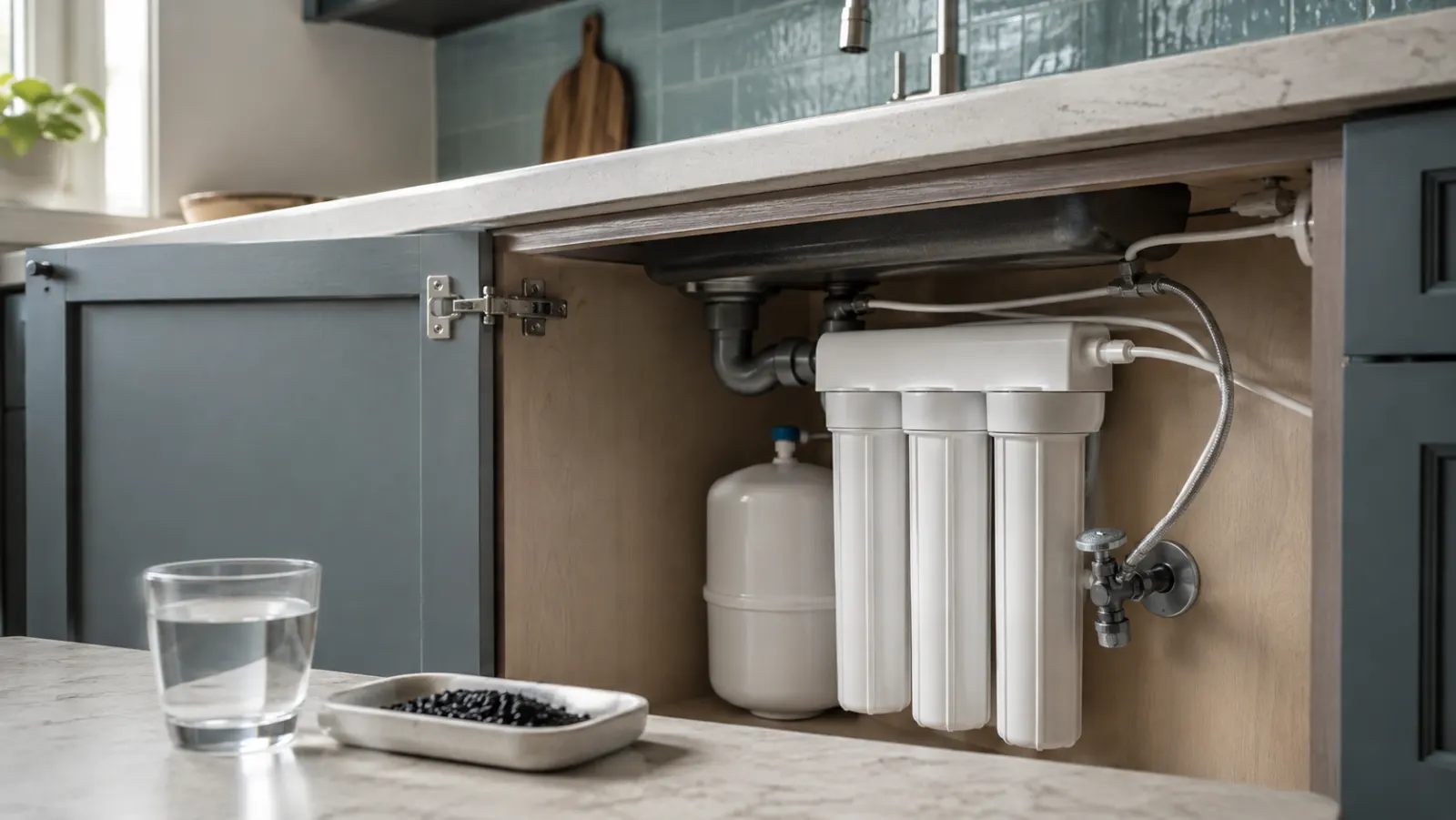
What to verify
- Certification and claim: NSF/ANSI 53 applies to adsorption/filtration systems and NSF/ANSI 58 to reverse-osmosis systems. Confirm the product is certified for PFAS or PFOA/PFOS reduction.
- Exact model: verify the model number and replacement cartridge in the certification body's current listing, not only a marketplace title.
- Capacity and maintenance: compare rated gallons, flow, replacement schedule, and ongoing cartridge cost. Performance depends on replacing media on time.
- Point of use: a kitchen-tap system targets water used for drinking and cooking. Whole-house treatment has different flow and maintenance requirements.
Certification tests performance under specified conditions. It does not mean a product removes every PFAS, and older certification protocols may not demonstrate reduction to the current 4.0 ppt PFOA/PFOS MCLs.