
Practical guide
How to test your own tap water
Utility records describe a water system; a laboratory sample describes your faucet at a particular time. Use a state-certified drinking-water laboratory when the result may guide a health, plumbing, or treatment decision.
 A clearer perspective.
 Public records. Clearer context.
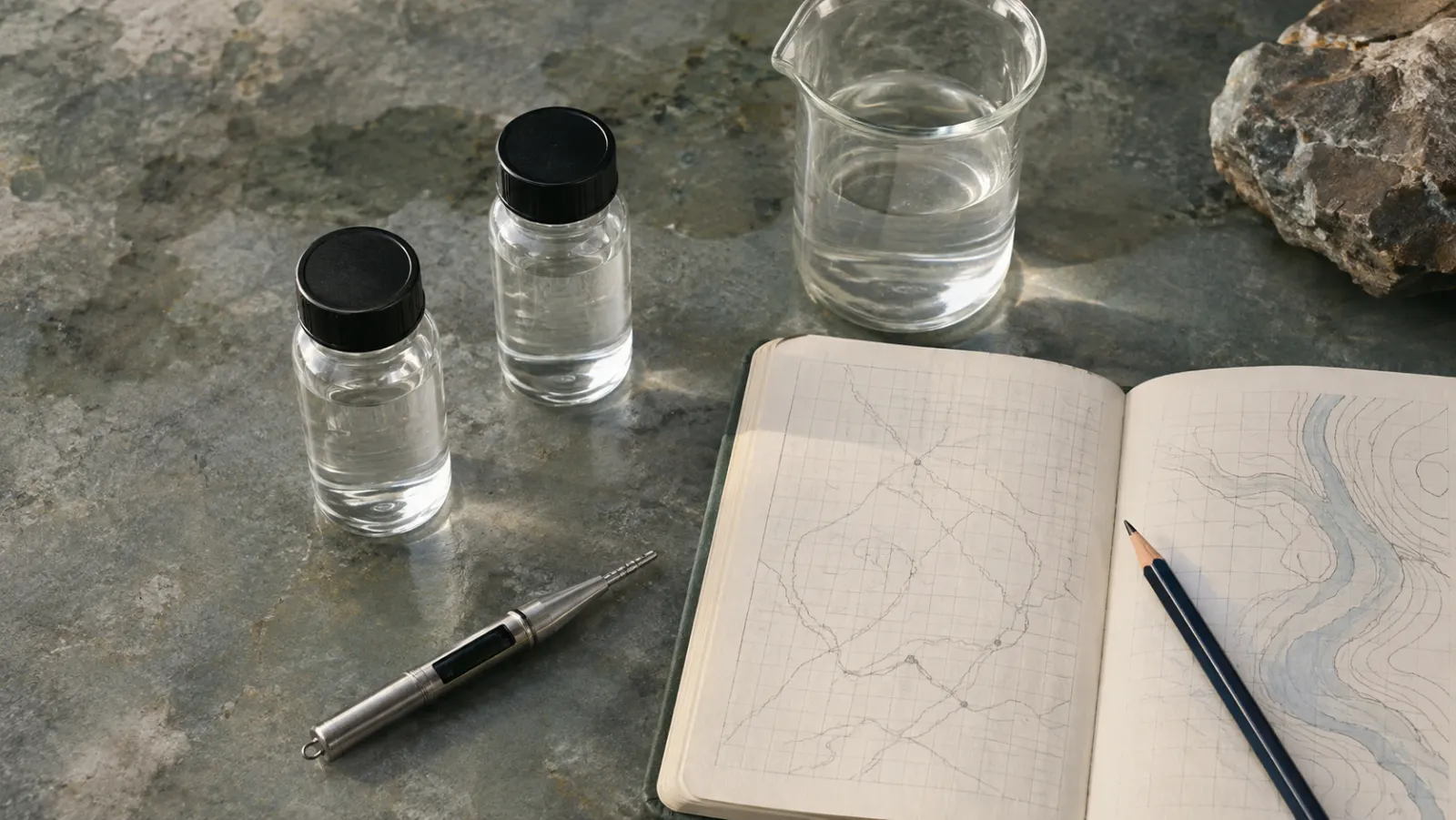
Before ordering
- Choose the contaminants based on your utility's Consumer Confidence Report, nearby land use, plumbing age, and—if you have a private well—local health-department guidance.
- Confirm that the laboratory is certified by your state for each analyte and method you need. Certification can be analyte-specific.
- Ask whether the kit includes preserved bottles, shipping materials, holding-time instructions, and a chain-of-custody form.
- For lead, follow the lab's exact first-draw or flushed-sample instructions. Those samples answer different questions.
Consumer test strips do not measure PFAS at parts-per-trillion concentrations. PFAS testing requires an appropriate laboratory method and careful sampling materials to avoid contamination.